
ACE Spectrum
ACE Spectrum
Ace Spectrum is about you — the ACE Learning Centers.
It’s a quick sharing of ideas, inspiration, opinions and best practices among our continuing education organizations.
Please join the conversation.
On Air! KALW Audio Academy Student’s Features Find Airtime Covering Local Stories
By Guest Columnist Ben Trefny, News Director, KALW Public Radio
After many months of training, the Academy fellows have reached the point of regularly getting their stories on the air.
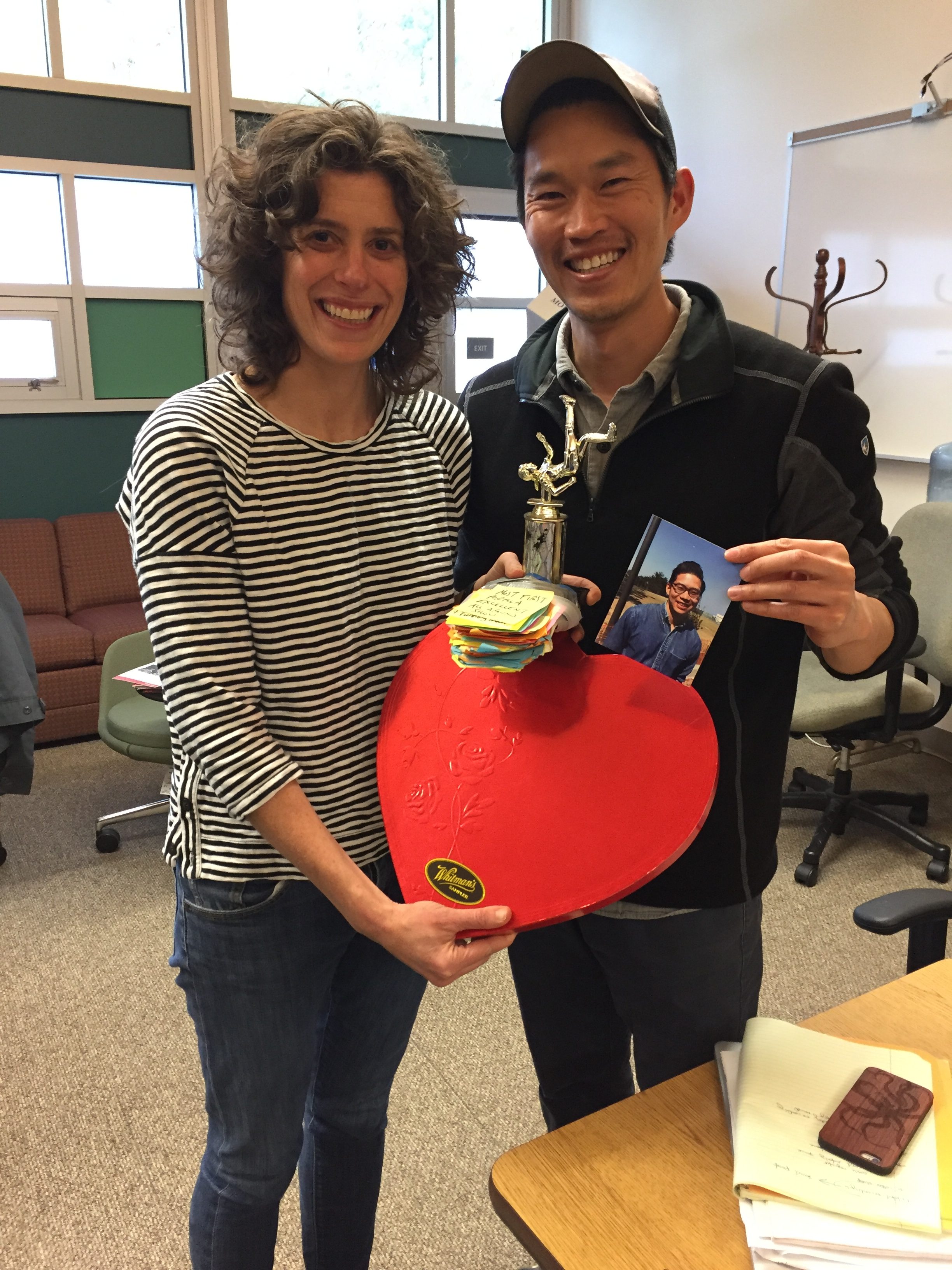
Audio Academy fellows Cari Spivack and Jeremy Jue share an in-house award (with classmate Boawen Wang — in the held photograph) for their Valentine’s Day show about San Francisco’s Portola District.
We asked every member of the class to make a feature about the neighborhood just down the hill from KALW, and they’ve been spending many weeks crafting them with their mentors. The first set of those features on the Portola District aired Tuesday, and they were a joy to hear. Cari Spivack‘s story took on one of my favorite topics: how do you actually pronounce Portola? Jeremy Jue brought us into a multigenerational gaming hub. And Boawen Wang showed us there’s a book club in the district for people with developmental disabilities. It was a lovely Valentine’s Day show!
This was also an extraordinary week of content on KALW’s Crosscurrents in which the work of our Audio Academy alums — and some current fellows — were really showcased.
On Monday, four stories by Angela Johnston (’14) and Eli Wirtschafter (’16) about California’s high-speed rail came together in a scene-rich documentary. The two reporters traveled up and down the rail line, bringing a range of stories and voices from the Central Valley up through San Jose and to San Francisco to give substance to the infrastructure debate. The stories were organized in a beautiful online package, and the doc was featured in The New York Times’ “California Today” section.
On Thursday, current Academy fellow Josiah Luis Alderete went to San Francisco’s Civic Center to record the “Day Without Immigrants” demonstration, which we paired with information from Cari Spivack about how quiet the Mission District’s cultural center was with store closings. Their work, contextualized with President Trump’s press conference that morning and information about his policies and rhetoric, set up a cohesive picture that led into a package of sound-rich stories about Japanese-American incarceration during World War II, including Academy alum Hannah Kingsley Ma‘s (’15) lovely profile of a Kindergarten teacher who was incarcerated as a five year old
As we approach spring, the foundational education we’ve developed with Audio Academy fellows starts to manifest in their storytelling. It’s an exciting time for them, and for me, and we’ll be sharing many more stories in the coming weeks and months!
—
Audio Academy graduate Geraldine Ah-Sue (’16) dropped by KALW last week to record a piece that will be air soon on Crosscurrents. She just landed an audio production job with one of San Francisco’s most popular museums. I asked her to share some thoughts about how the Audio Academy affected her life, and here’s what she had to say:
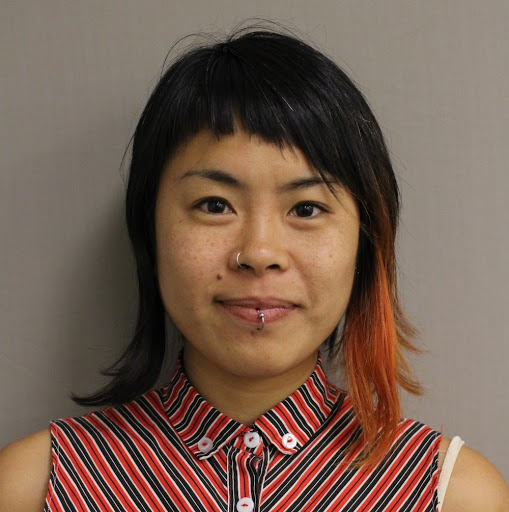
Audio Academy graduate Geraldine Ah-Sue (’16).
When I was a child, much to my dismay, I wasn’t allowed to watch television. Well, I was on a very restricted diet: approximately 2 hours of TV a week. But two hours wasn’t enough. I craved to know what was happening on the tube. So, not being able to sit directly in front of it, I’d instead sit just outside of the TV room, where I could still hear everything. I’d hear scenes from shows like I Love Lucy and Bewitched, a network crime drama or a sitcom, and that’s how I’d watch television. By listening.
“Think with your ear.”
I’ve been thinking about these words a lot lately. This was one of the first pieces of advice I took home from Audio Academy, and it’s still with me. I realize that since childhood, I’ve actually been consuming stories with my ear, passively constructing them in my imagination. Audio Academy is where I got to turn that script upside down, where I got to come out of hiding from the room next to the television and actively make a story specifically intended for the ear.
With Audio Academy, I learned the language and tools needed to consciously be my own audio storyteller. I learned about sound-gathering, scene-setting and script-writing; finding characters and talking to them; tracking, mixing and sound design; and, perhaps most importantly, how empowering it is to make a world of audio! I spent so much of my childhood thinking that accessing stories through the ear was a kind of deprivation. Audio Academy showed me how to take that experience and turn it into a super power of creation. I recently got hired to produce SFMOMA’s second season of their podcast, Raw Material. This season we’re focusing on art and social justice, and I’m taking everything I’ve learned from the Academy — skills and heart — with me.
The KALW Audio Academy News Team Covers National Politics From a Local Angle
By Guest Blogger Ben Trefny, News Director, KALW Public Radio
We’ve been putting a lot of energy, at KALW, into covering how the Trump Administration is trying to change the world. Much of the recent work by the Audio Academy and its alums reflects that. Check out some of these examples:
Cari Spivack and Jeremy Jue did some on-the-spot reporting as President Trump’s executive orders around immigration began to come down. Their research helped me put together this informative conversation with our host, Hana Baba, as the news was unfolding.
The weekend after President Trump signed the executive order banning residents from seven countries and all refugees from coming into the United States, Cari and Liza Veale (’15) went to San Francisco International Airport on separate occasions to document the protests. Here are the sounds they recorded.
Jeremy put together this piece showing the ways in which school districts around the Bay Area have responded to the President’s executive order to increase enforcement of the nation’s immigration laws. On Friday, I adapted that and paired it with this conversation I had with the San Francisco Unified School District Chief of Staff about the confirmation of Betsy DeVos as Secretary of Education.
Also, Hannah Kingsley-Ma (’15) worked with students from the SFUSD who attended the Women’s March in Washington D.C. She spoke with them before the trip, trained them on how to record during the demonstration, and then interviewed them after the experience. It resulted in this story.
We heard back from one of the adults who helped coordinate the trip. Here’s part of what she had to say:
I’ve heard from Aglow and Briana after you aired their voices. They were both really proud. Aglow shared it with her class. Briana’s sister told her that she had spoken for her too, and how important her voice was. It’s been pretty life-changing for them — thanks for providing them the platform for real voice, and a new way to see themselves.
This is the kind of work that drives and fulfills us, and we’re proud to provide a platform for voices that otherwise wouldn’t be heard.
Here are some thoughts from Academy fellow, and my mentee, Nicole Grigg:
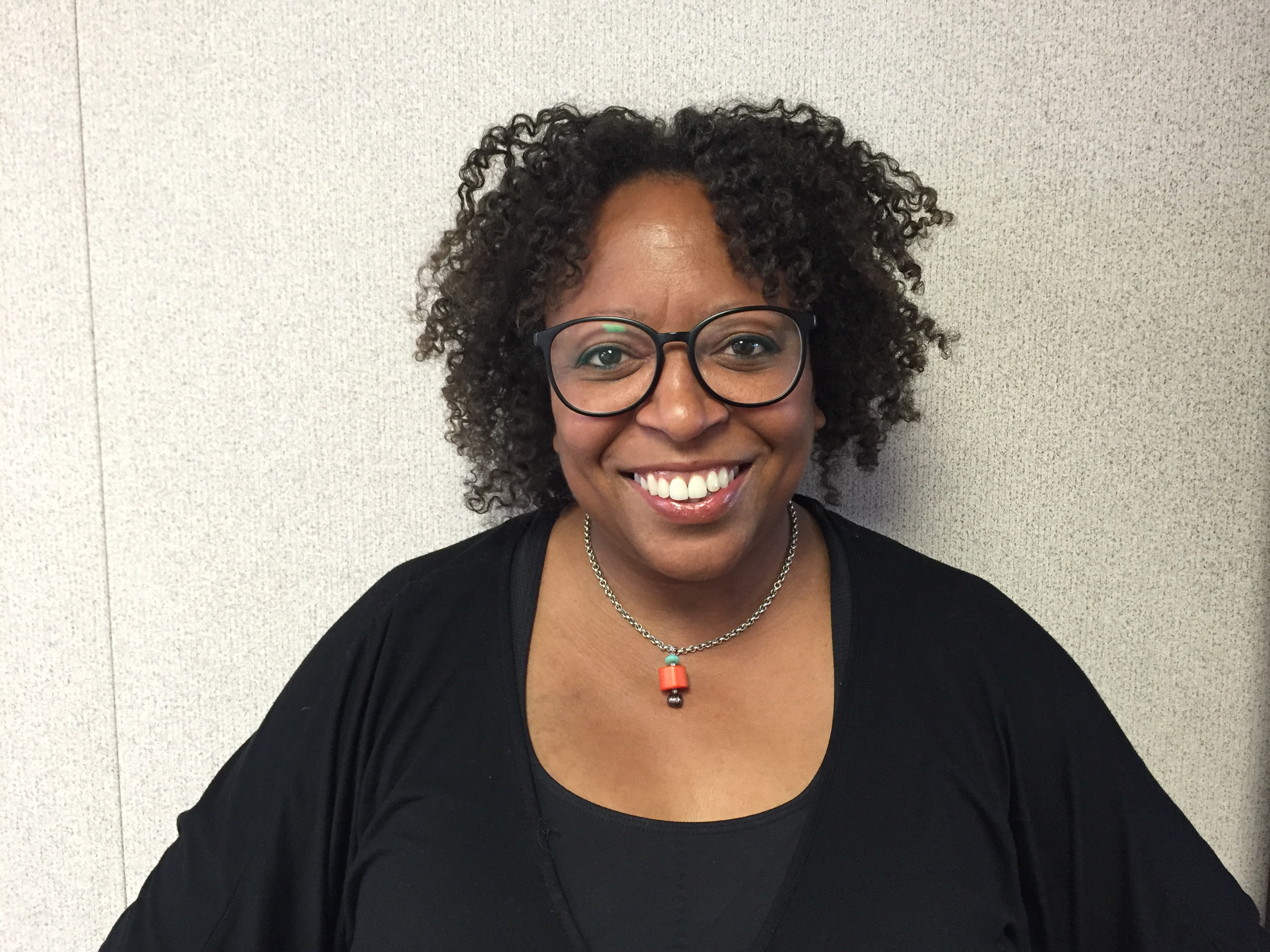
Audio Academy Fellow Nicole Grigg.
Working in the KALW newsroom as an Audio Academy Fellow is invigorating. Electric. Even when everyone has headphones on, silently buried in their computer screens, the energy in the room is inspiring. I sought out this fellowship in order to leave commercial radio behind and retrain as a journalist to work in public radio and tell stories that are in the public’s interest. The Audio Academy gives me purpose, focus, and supports my goals to that end.
Imagine a space where smart, thoughtful, diverse, kind people interact, create and help one another reach for a higher standard by sharing ideas and better practices. That is how I would describe my experience in the newsroom at KALW.
Ethics in journalism is a topic that is really heating up for all of us lately. Where are the lines between being a reporter and honoring the values in one’s personal life? What can we do to ensure that we are reporting with integrity and honoring other points of view in the community? Is there such a thing as unbiased objectivity or is balance in our reporting a more honest goal? Our editors and managers are working hard to create a space to listen to all of us and help us navigate this new-ish political and social climate.
I think the aspect of this fellowship that I value most is my mentorship. Ben pushes me when I get distracted and challenges me to do better and think in color. I still aspire to be proficient at Pro Tools, and I am sure that I will get there! I am confident that I will get to where I want to be and beyond because of this Audio Academy Fellowship. It is an honor to be in this space.
SF International High School Pioneers Continuing Education At ACE Learning Center
By Guest Blogger Kyle Halle-Erby, Span Program Director, San Francisco International High School
This year, the ACE Learning Center at SF International High School (SFIHS) has taken an innovative turn in providing continuing education services to our students. Across San Francisco Unified School District, there are diverse school options for all students including a range of alternative continuation schools for students with unique needs. These schools offer independent study coursework, flexible schedules and increased counseling or case management services to meet the needs of many students for whom a traditional high school (8am-3pm, Monday-Friday) will simply not work. However, these programs have not been open to English learners.
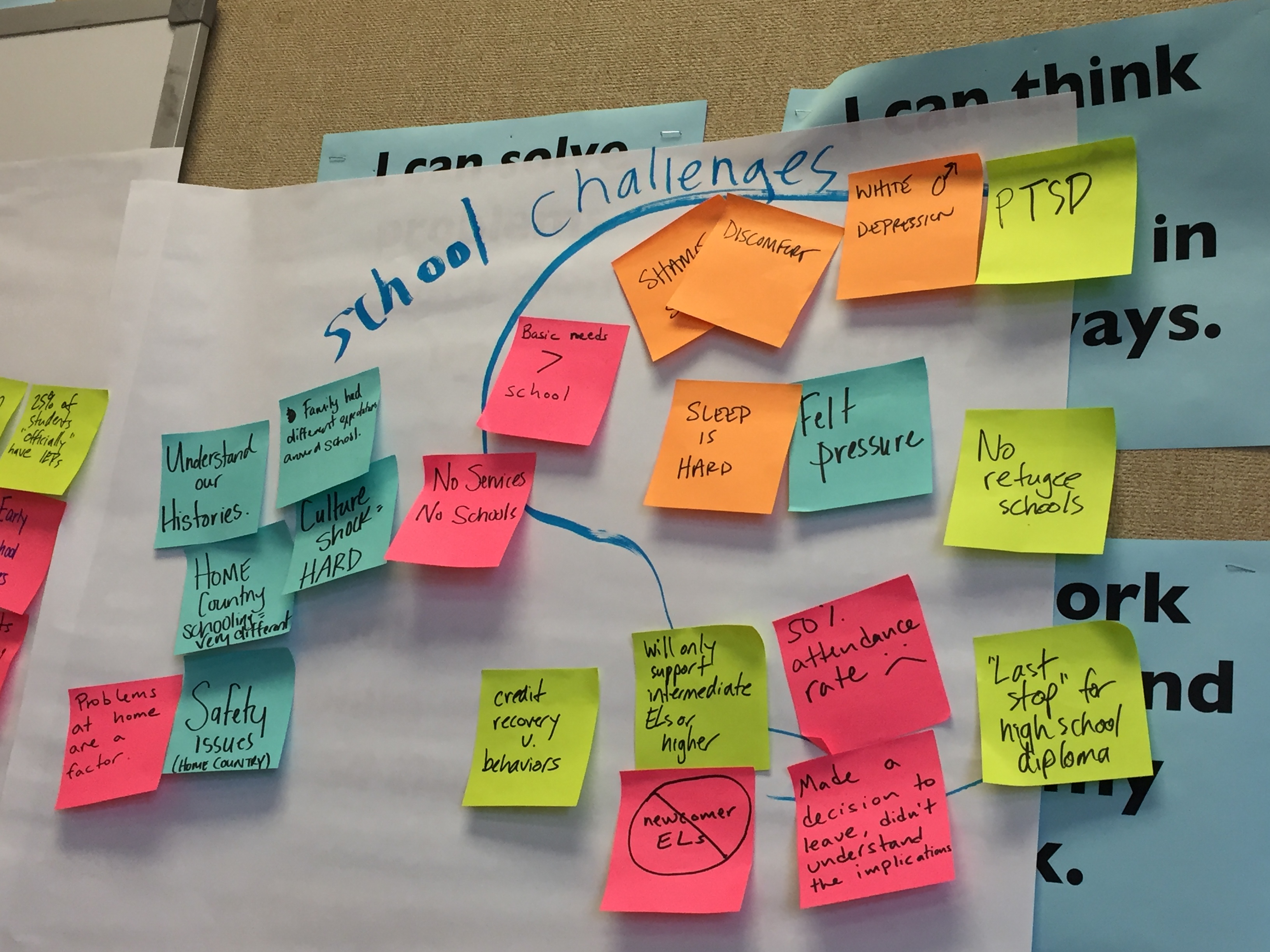
The reasons why English learners find attending school challenging are numerous.
At SFIHS, we have seen the consequences of this policy. Too often, this gap in programming has pushed our students out of school. Too often, we have seen students who want to continue studying drop out because they work all night and cannot attend school from 8am-3pm. But this year, with the support of the SFUSD Innovation Lab, a team from SF International went to work on designing a pilot program for English learners that would incorporate the independent study and flexible schedule components of successful continuation schools.

Kyle Halle-Erby, Span Program Manager (standing, right) works with students.
In the process, we challenged our assumptions about the students we want to serve by interviewing current and former students. We learned best practices by working with administrators from successful continuation schools in our district. And, we developed a team of teachers and staff at SFIHS committed to seeing this program come to life.
We still have more work to do, but for the first time we see a clear path to graduation for students we feared were at the end of the road.